Napoleon Tomb TicketsTickets & Tours
Paris · History & visitor context

Tomb of Napoleon Bonaparte History & Visitor Information

Napoleon’s Tomb is more than a sarcophagus. It began as Louis XIV’s chapel for Les Invalides, was built by Jules Hardouin-Mansart, and reshaped by Louis Visconti for Napoleon’s burial. Learn the layers that explain the Dôme when you stand inside.

Original purposeRoyal chapel of Les Invalides
ArchitectJules Hardouin-Mansart
Napoleon laid to rest2 April 1861
Address129 rue de Grenelle, Paris
Origins

A royal institution for former soldiers

The Dôme was part of a much larger military home. Its scale makes sense once you see it as royal ceremony, care for veterans and state power.

01 1670–1674

Louis XIV creates Les Invalides

Louis XIV ordered Les Invalides for soldiers who had served the royal army. The institution first received veterans in 1674, giving the complex a living military purpose before the great chapel existed.

Why this matters The tomb stands inside a place made for military service, not a building created for Napoleon.
02 1677–1706

A chapel built for the king

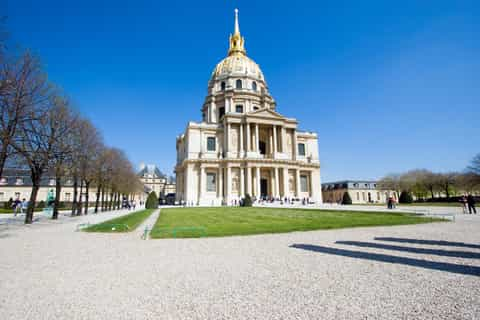
From 1677, Jules Hardouin-Mansart built the royal chapel beside the veterans’ church. The completed Dôme gave Louis XIV a grand setting for worship, ceremony and royal presence.

Look upward The high central space was designed to impress before it became a burial monument.
!
Napoleon did not build the Dôme.

The church was completed in 1706, long before Napoleon’s remains returned from Saint Helena in 1840. His tomb transformed an existing royal chapel into an imperial memorial.

Interior of the Dôme des Invalides around Napoleon's tomb
A royal chapel reshaped around an imperial tomb The central opening and lower crypt belong to Louis Visconti’s nineteenth-century intervention. The soaring church around them belongs to the earlier royal design.
How it changed

Seven decisions that made the Dôme

The building combines royal architecture, military memory and an imperial burial. Each phase changed how visitors read the same space.

011670–1674

Les Invalides opens to veterans

Louis XIV established the institution for former soldiers. The chapel belonged to a complex that combined care, discipline and religious life.

What remainsThe wider courtyards and military setting still frame the Dôme.
021677–1706

Mansart builds the royal chapel

Jules Hardouin-Mansart created the Dôme as a separate royal chapel. Its ordered columns and painted interior make the building feel ceremonial before you reach the tomb.

What to noticeTurn away from the crypt to see the original royal composition.
031840

Napoleon’s remains return to France

King Louis-Philippe decided to transfer Napoleon’s remains from Saint Helena to Les Invalides. The choice joined Napoleon’s memory to France’s military institution.

Important distinctionThe return in 1840 came before the completed tomb.
041840–1861

Visconti cuts a crypt into the church

Architect Louis Visconti carried out major excavation to fit the imperial tomb beneath the central floor. His work added the circular viewing arrangement and monumental burial space.

What to noticeLook down first, then walk below to understand Visconti’s two-level design.
052 April 1861

Napoleon reaches his final resting place

Napoleon I’s body was laid to rest inside the completed tomb. The reddish quartzite sarcophagus became the centre of a carefully staged church interior.

Visitor takeawayThe sarcophagus is a monument within a monument, not an isolated coffin.
061861–present

Other military memorials share the Dôme

The Dôme also holds Vauban’s mausoleum, graves of Napoleon II, Joseph and Jérôme Bonaparte, and tombs of Marshals Foch and Lyautey.

What remainsThese memorials make the Dôme a wider place of French military remembrance.
07Present day

A chapel and museum setting

The Dôme remains part of the Hôtel National des Invalides, operated by the Musée de l’Armée. Its royal, imperial and military layers remain visible together.

Important distinctionNapoleon’s tomb is one part of Les Invalides, not the whole complex.
Materials

Quartzite over granite

The outer sarcophagus is reddish quartzite on a green granite base. The colour contrast helps separate the tomb from the pale stone church.

Power

Two rulers, one setting

Louis XIV commissioned the royal chapel. Louis-Philippe made it Napoleon’s final resting place, using an older royal space for a new national memory.

Scale

A monument seen from above

The circular opening makes visitors look down before entering the crypt. That route controls how the tomb first appears.

Five dates worth remembering before you visit

You do not need every name in the complex. These five dates explain the shift from veterans’ institution to royal chapel to imperial memorial.

  1. 1670: Louis XIV orders Les Invalides for soldiers who served the royal army.
  2. 1674: Veterans first enter the institution, establishing its military purpose.
  3. 1677: Jules Hardouin-Mansart begins the royal chapel of Les Invalides.
  4. 1840: Louis-Philippe orders Napoleon’s remains transferred from Saint Helena.
  5. 1861: Napoleon I is laid to rest in Visconti’s completed tomb on 2 April.
Architecture & meaning

A royal church turned into a view of empire

The Dôme’s form came first. Napoleon’s monument later used its central space and ceremonial scale for a different political message.

How the building works

Two levels frame one tomb

The church rises around a central opening, while the tomb sits below in a circular crypt. Visitors first see it from above, then meet it at floor level.

  • The upper balustrade around the opening
  • The circular route around the sarcophagus
  • Columns lifting the eye toward the painted dome
Why the imagery matters

Military memory fills a royal chapel

The tomb changed the church into a memorial to imperial power. The surrounding figures and graves widen that message beyond Napoleon alone.

  • Twelve Victory figures around the tomb
  • Vauban’s mausoleum and later military tombs
  • A royal chapel later given imperial meaning

The sarcophagus is not the oldest thing in the room

Its monumental scale can make the whole Dôme seem Napoleonic. Most of the architecture around it was made for Louis XIV’s royal chapel.

Read the sarcophagus as Visconti’s insertion into an earlier building. The contrast is the point of the visit.

The Dôme is not Napoleon’s private mausoleum

Napoleon is the central figure, but the Dôme holds a longer map of military remembrance. Vauban, members of the Bonaparte family and twentieth-century marshals change the meaning of the space.

What to notice

Six details that make the visit clearer

The room can feel overwhelming. Follow this short list instead of trying to study every surface at once.

1. The view from above

The opening makes the tomb appear before the crypt. It is part of Visconti’s nineteenth-century design.

2. The church around it

Look at the columns and dome before looking down again. They belong to Mansart’s royal chapel.

3. The red and green stone

The reddish quartzite sarcophagus and green granite base make the imperial monument distinct from its church setting.

4. The circular route

Walking around the crypt changes the tomb from a distant object into a complete funerary arrangement.

5. The Victory figures

The twelve figures show that the monument was designed as a statement about military achievement, not only burial.

6. The other memorials

Find Vauban and the later tombs to see how one emperor became part of a larger military landscape.

Ready to visit

Look at the Dôme as layers of history, not one famous tomb.

Start with the royal church above, then look through the central opening, then walk around the crypt. That order reveals why Napoleon’s tomb feels so commanding: it was placed inside a space already built for power and ceremony.